Artan
Azalan
Ýþlem
BIST 30
BIST 50
BIST 100
NASDAQ 100
Hisse Fiyat Fark% Hacim (TL) Düþük / Yüksek
18,80 12.04% 12,76 Mn 15,58 / 24,46
15,40 10% 1,11 Mr 13,76 / 15,40
55,00 10% 334,90 Mn 48,06 / 55,00
836,00 10% 3,94 Mr 726,00 / 836,00
146,40 9.99% 542,34 Mn 139,20 / 146,40
Hisse Fiyat Fark% Hacim (TL) Düþük / Yüksek
67,95 -10% 106,59 Mn 67,95 / 73,80
3,15 -10% 184,17 Mn 3,15 / 3,50
2.433.000,00 -9.99% 2,43 Mn 2.433.000,00 / 2.433.000,00
8,21 -9.98% 2,06 Mr 8,21 / 9,12
42,06 -9.97% 758,02 Mn 42,06 / 46,72
Hisse Fiyat Fark% Hacim (TL) Düþük / Yüksek
292,00 -1.77% 12,59 Mr 291,75 / 299,25
260,00 1.36% 10,30 Mr 256,25 / 264,50
81,20 0.06% 7,48 Mr 78,75 / 83,50
342,00 1.48% 7,37 Mr 337,00 / 344,75
13,10 -1.65% 6,58 Mr 13,04 / 13,41
Hisse Fiyat Fark% Hacim (TL) Düþük / Yüksek
16,61 -3.65% 692,10 Mn 16,56 / 17,40
69,25 -1.49% 6,10 Mr 68,50 / 70,70
342,00 1.48% 7,37 Mr 337,00 / 344,75
204,70 -2.62% 3,64 Mr 203,00 / 211,40
685,50 -0.8% 3,02 Mr 683,50 / 697,50
Hisse Fiyat Fark% Hacim (TL) Düþük / Yüksek
16,61 -3.65% 692,10 Mn 16,56 / 17,40
69,25 -1.49% 6,10 Mr 68,50 / 70,70
87,25 -4.33% 493,50 Mn 87,20 / 91,10
106,90 -3.17% 146,76 Mn 106,90 / 110,90
342,00 1.48% 7,37 Mr 337,00 / 344,75
Hisse Fiyat Fark% Hacim (TL) Düþük / Yüksek
16,61 -3.65% 692,10 Mn 16,56 / 17,40
27,54 -2.27% 147,17 Mn 27,36 / 28,40
69,25 -1.49% 6,10 Mr 68,50 / 70,70
10,14 -2.31% 219,64 Mn 10,08 / 10,50
79,40 -1.31% 306,71 Mn 78,45 / 81,15

Masrafsýz Bankacýlýk + 1.000 TL Nakit! Enpara’dan Çifte Avantaj

Masrafsýz Bankacýlýk + 1.000 TL Nakit! Enpara’dan Çifte Avantaj
Sayfa 1967/2714 ÝlkÝlk ... 9671467186719171957196519661967196819691977201720672467 ... SonSon
Arama sonucu : 21708 madde; 15,729 - 15,736 arasý.

Konu: ...:::vobelýt:::...

  1. #15729
    Tuesday December 12 2023 Actual Previous Consensus

    04:30 PM
    US
    Core Inflation Rate MoM NOV 0.3%
    0.2% 0.3%
    04:30 PM
    US
    Core Inflation Rate YoY NOV 4%
    4% 4%
    04:30 PM
    US
    Inflation Rate MoM NOV 0.1%
    0% 0%
    04:30 PM
    US
    Inflation Rate YoY NOV 3.1%
    3.2% 3.1%

    Enflasyonu aylýk %2.3 düþüþ ile enerji fiyatlarý,%1.3 düþüþ ile giyim fiyatlarý aþaðý çekerken,enerji hariç hizmet enflasyonu aylýk %0.5 arttý.Enflasyon sepetinde %33 ile en büyük aðýrlýða sahip kira fiyatlarý aylýk %0.5 güçlü artýþ trendini sürdürmeye devam ediyor.Týbbi bakým hizmetleri fiyatlarý aylýk %0.6,ulaþtýrma hizmetleri aylýk %1.1 güçlü fiyat artýþlarý gösterdiler.
    Son düzenleme : deniz43; 12-12-2023 saat: 16:50.

  2.  Alýntý Originally Posted by ragwaer Yazýyý Oku
    Deniz hocam iyi akþamlar diliyorum öncelikle. Tekrar tekrar belirtmek isterim ki, tüm yazýlarýnýz özel ders niteliðinde. Bu konuda size ne kadar teþekkür etsem azdýr.
    Ýzninizle, sizin fikrinizi öðrenmek istediðim konu, enflasyon muhasebesi ile ilgili.
    Sektörel anlamda, GYO þirketlerinin enflasyon muhasebesi uygulamasýndan nasýl etkileneceðini öngörürsünüz?
    Düþüncelerinizi paylaþýrsanýz çok memnun olurum.
    Þimdiden teþekkürler.

    Redmi Note 9 Pro cihazýmdan hisse.net mobile app kullanarak gönderildi.

     Alýntý Originally Posted by deniz43 Yazýyý Oku
    Genel olarak GYO sektörü " Parasal olmayan aktif varlýklarý güçlü, finansmanýný borçlanma ile yapan," þirketler olduðundan enflasyon muhasebesinden " ilave gelir yazma (kar artýrýcý/zarar azaltýcý)" yönde etkilenmeleri beklenir ,bu durum vergi matrahlarýný artýracak ve ilave vergi hesaplamalarýný gerektirecek.

    https://www.ekonomim.com/kose-yazisi...-talebi/717824
    Ýzninizle,soru yanlýþ sorulmuþ,soru yanlýþ sorulunca cevap farklý olmuþ..

    GYO ne demek? Gayrimenkul Yatýrým Ortaklýðý demek.
    Sanýrým soru Gayrimenkul sektörü olarak sorulmalýydý,yani inþaat sektörü.
    ____________________________________________
    Halka açýk GYO þirketleri gelir vergisinden muaf ve temettü daðýtýmýnda stopaj oraný 0 (sýfýrdýr).

    Dolayýsýyla gayrimenkul yatýrým ortaklýklarýnýn, Gelir Vergisi Kanununun 94 üncü maddesine göre stopaj yükümlülüðü bulunmakta olup halen yürürlükte olan oran %0 dýr.

    https://www.verginet.net/dtt/4/gayri...beklenmektedir.

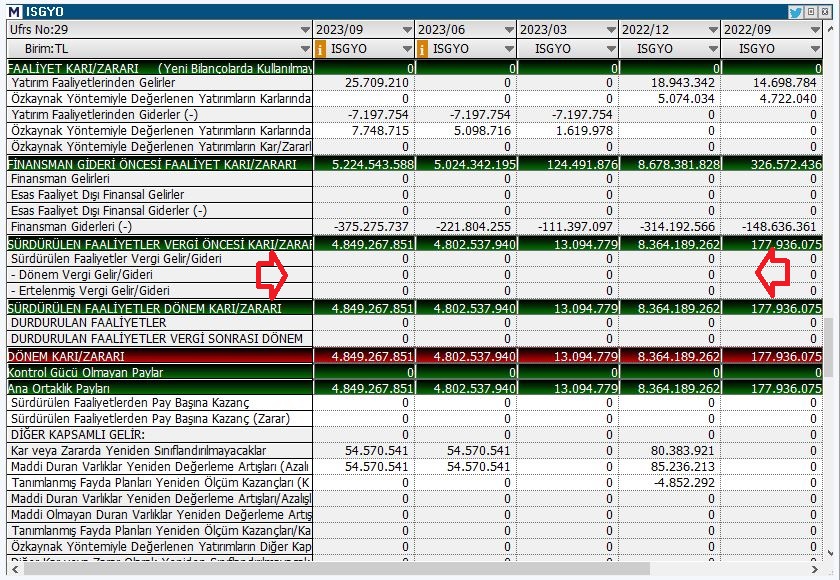
    Alttaki örnek ÝÞ GYO þirket bilançosudur,vergi matrahý 0 (sýfýrdýr)

    Ancak GYO þirketleri nakit temettü daðýttýklarýnda temettü alan kurumlar veya þahýslar vergiye tabidir.
    Hal böyle olunca enflasyon muhasebesi GYO þirketlerini direkt olarak ilgilendirmez.
    saygýlar sn.Deniz hocam.

    YTD

  3. Gayrimenkul Yatýrým Ortaklýklarý: Neden Varlar? Ne Farklarý Var?


    GYO larýn Kurumlar Vergisi Ýstisnasý, Sahip Olduklarý Tek Vergi Ýstisnasýdýr

    Düþünüldüðünün aksine GYO larýn vergi istisnasý son derece sýnýrlýdýr. Sadece, Kurumlar Vergisi ödemez GYO lar ve kar daðýtýmýnda stopaj oraný sýfýrdýr. Bunun dýþýnda baþkaca kendilerine özel bir vergi istisnasý bulunmamaktadýr. Buna karþýlýk GYO dan kar payý elde eden Türkiye de yerleþik gerçek kiþi ya da kurumlar elde ettikleri kazancý diðer kurumlardan elde ettikleri kar payý gibi beyan edip vergisini öderler.

    https://www.pwc.com.tr/tr/medya/kose...klari-var.html

  4.  Alýntý Originally Posted by nohut Yazýyý Oku
    Gayrimenkul Yatýrým Ortaklýklarý: Neden Varlar? Ne Farklarý Var?


    GYO larýn Kurumlar Vergisi Ýstisnasý, Sahip Olduklarý Tek Vergi Ýstisnasýdýr

    Düþünüldüðünün aksine GYO larýn vergi istisnasý son derece sýnýrlýdýr. Sadece, Kurumlar Vergisi ödemez GYO lar ve kar daðýtýmýnda stopaj oraný sýfýrdýr. Bunun dýþýnda baþkaca kendilerine özel bir vergi istisnasý bulunmamaktadýr. Buna karþýlýk GYO dan kar payý elde eden Türkiye de yerleþik gerçek kiþi ya da kurumlar elde ettikleri kazancý diðer kurumlardan elde ettikleri kar payý gibi beyan edip vergisini öderler.

    https://www.pwc.com.tr/tr/medya/kose...klari-var.html
    Bu arkadaþta yanlýþ girmiþ konuya.(bence)
    GYO þirketlerinde Kurumlar vergisi yok, temettü daðýtýmýnda stopaj sýfýr (0).
    Daha ne olsun..?

    YTD

  5. #15733
    GYO daha önce ilgi alanýma girmeyen bir konu,genel bir muhasebe prensipi açýsýndan yazdým..Eðer kurumlar vergisi %0 ise,yazdýðýnýz doðru.

  6. #15734
     Alýntý Originally Posted by deniz43 Yazýyý Oku
    Tuesday December 12 2023 Actual Previous Consensus

    04:30 PM
    US
    Core Inflation Rate MoM NOV 0.3%
    0.2% 0.3%
    04:30 PM
    US
    Core Inflation Rate YoY NOV 4%
    4% 4%
    04:30 PM
    US
    Inflation Rate MoM NOV 0.1%
    0% 0%
    04:30 PM
    US
    Inflation Rate YoY NOV 3.1%
    3.2% 3.1%

    Enflasyonu aylýk %2.3 düþüþ ile enerji fiyatlarý,%1.3 düþüþ ile giyim fiyatlarý aþaðý çekerken,enerji hariç hizmet enflasyonu aylýk %0.5 arttý.Enflasyon sepetinde %33 ile en büyük aðýrlýða sahip kira fiyatlarý aylýk %0.5 güçlü artýþ trendini sürdürmeye devam ediyor.Týbbi bakým hizmetleri fiyatlarý aylýk %0.6,ulaþtýrma hizmetleri aylýk %1.1 güçlü fiyat artýþlarý gösterdiler.

    ABD Enflasyonunun Analizi

    -Inflation in services accelerated in November for the second month in a row, to an annualized rate of 5.8%, driven by housing, healthcare, and insurance. Services is where about 65% of consumer spending goes, and it continues to be the driver of inflation.

    -But gasoline continued to plunge. Durable goods prices continued to drop. Food prices rose to a new record from already high levels.

    -Core CPI was pushed down by the decline in durable goods, but pushed up by the jump in core services.

    -The CPI for core services (without energy services) on a month-to-month basis rose 0.47% in November from October, or by 5.8% annualized (blue line).

    The three-month moving average rose by 0.46%, or 5.7% annualized, the sharpest increase since April (red line).The acceleration of the three-month moving average in September, October, and November is very disconcerting.

    https://wolfstreet.com/wp-content/up...s-MOM_3mma.png

    -Year-over-year, the core services CPI rose by a red-hot 5.5%, same as in the prior month, despite the 30% collapse of the messed-up year-over-year health insurance CPI within it that we'll get to in a moment:

    -The "Rent of primary residence" CPI further accelerated to +0.48% in October (+5.9% annualized) and has been in this range since March, except for the outlier July, when it had dropped out of that range.
    The Rent CPI is based on actual rents that tenants actually paid. The survey follows the same large group of rental houses and apartments over time and tracks what tenants, who come and go, actually pay in these units.

    -The "Owners' equivalent of rent" CPI rose by 0.50% in November from October, or 6.2% annualized, a hair higher than in March.
    The three-month moving average rose by 0.49%, the highest since June, and there hasn't been any real improvement since May.
    The OER index is based on what a large group of homeowners estimates their home would rent for, and is designed to estimate inflation of "shelter" as a service for homeowners.

    -What both CPIs for housing costs tell us is that the rent CPIs have settled at month-to-month increases of around 0.5%, or about 6% annualized, which also roughly matches what the largest landlords have reported in their earnings calls that they're getting in rent increases. So about since March, it seems rent increases have gotten stuck at a rate close to 6%, and that's very disconcerting.

    Year-over-year, the Rent CPI increased by 6.9% . And the CPI for OER increased by 6.7%

    -The chart shows the CPI Rent (blue, left scale) as index values, not percent change; and the ZORI in dollars (red, right scale). The left and right axes are set so that they both increase each by 50% from January 2017, with the ZORI up by 47% and the CPI Rent up by 35% since 2017:

    https://wolfstreet.com/wp-content/up...s-Index_-_.png

    -Rent inflation vs. home-price inflation: The red line represents the CPI for Rent of Primary Residence (tracking actual rents). The purple line represents the Case-Shiller Home Price 20-Cities Composite Index. Both lines are index values set to 100 for January 2000:

    https://wolfstreet.com/wp-content/up...ousing-CPI.png

    -The collapse of the health insurance CPI. November was the second month without the monthly push-down adjustments to the health insurance CPI, which started with the October CPI in 2022 and went through September 2023.

    These odious health insurance adjustments had caused the health insurance CPI to collapse by nearly 4% month-to-month every month for 12 months through September, leading to the 37% year-over-year collapse by September. The problem arose because the pandemic healthcare distortions had blown up the model the BLS used to estimate health insurance costs, and the BLS was slow in changing the model. It has now tweaked the model. I discussed the old and new versions last month here: The Collapse of the Health Insurance CPI (How it Became Chickenshit).

    Starting in October and continuing in November - and at least for the next four months - the health insurance CPI flipped the other way and jumped month-to-month by 1.1% for the second month in a row. Those two month-to-month increases reduced the year-over-year spike to +30.3% in November from +37.3% in September.

    Here is the infamous chart of the Health Insurance CPI as index value, which back to where it had been in 2018, which is outrageously ridiculous. Now the index is reversing, and that little hook at the bottom represents the two months of 1.1% increases in a row:
    https://wolfstreet.com/wp-content/up...ndex_value.png

    NOT:Saðlýk sigortasý fiyatlarýndaki metodik hatalar ,%37 düþüþ getirdi ve yýllýk ABD enflasyonunu aþaðýya çekti,þimdi metodik hesaplamada düzeltme yapýldýðý için önümüzdeki aylarda tersine enflasyonu yukarý çekecek.


    Inflation in services accelerated in November for the second month in a row, to an annualized rate of 5.8%, driven by housing, healthcare, and insurance. Services is where about 65% of consumer spending goes, and it continues to be the driver of inflation.

    But gasoline continued to plunge. Durable goods prices (cars, electronics, furniture, etc.) continued to drop, though used car prices suddenly jumped again . Food prices rose to a new record from already high levels. So here we go.

    Core CPI, a measure of underlying inflation that excludes the volatile movements of food and energy products, rose by 0.28% in November from October (red line), according to the Consumer Price Index data released today by the Bureau of Labor Statistics.

    Core CPI was pushed down by the decline in durable goods, but pushed up by the jump in core services.


    The three-month moving average, which irons out the month-to-month ups and downs, also rose by 0.28%, the biggest increase since June (blue):


    The Overall CPI inched up by 0.1% in November from October, driven down by the 6.0% month-to-month plunge in gasoline prices and the drop in durable goods. As you can see, this index jumps up and down a lot, driven by the often-massive movements of energy prices (red). The three-month average, rose by 0.18% (blue):


    The year-over-year "Core" CPI rose by 4.0% year-over-year, same as in the prior month (red line).

    The year-over-year overall CPI decelerated a hair to 3.1% (blue line), pushed down by the 8.9% year-over-year plunge in gasoline prices and by the 1.6% drop in durable goods, while the 5.5% increase in core services pushed in the opposite direction.


    Core services got hotter, rents glow in the dark.
    The CPI for core services (without energy services) on a month-to-month basis rose 0.47% in November from October, or by 5.8% annualized (blue line).

    The three-month moving average rose by 0.46%, or 5.7% annualized, the sharpest increase since April (red line).


    The acceleration of the three-month moving average in September, October, and November is very disconcerting:


    Year-over-year, the core services CPI rose by a red-hot 5.5%, same as in the prior month, despite the 30% collapse of the messed-up year-over-year health insurance CPI within it that we'll get to in a moment:


    The "Rent of primary residence" CPI further accelerated to +0.48% in October (+5.9% annualized) and has been in this range since March, except for the outlier July, when it had dropped out of that range.

    The Rent CPI is based on actual rents that tenants actually paid. The survey follows the same large group of rental houses and apartments over time and tracks what tenants, who come and go, actually pay in these units.


    The "Owners' equivalent of rent" CPI rose by 0.50% in November from October, or 6.2% annualized, a hair higher than in March.

    The three-month moving average rose by 0.49%, the highest since June, and there hasn't been any real improvement since May.

    The OER index is based on what a large group of homeowners estimates their home would rent for, and is designed to estimate inflation of "shelter" as a service for homeowners.


    What both CPIs for housing costs tell us is that the big month-to-month rent spikes in 2022 through February 2023 are over, and that the rent CPIs have settled at month-to-month increases of around 0.5%, or about 6% annualized, which also roughly matches what the largest landlords have reported in their earnings calls that they're getting in rent increases. So about since March, it seems rent increases have gotten stuck at a rate close to 6%, and that's very disconcerting.

    Year-over-year, the Rent CPI increased by 6.9% (red in the chart below). And the CPI for OER increased by 6.7% (green):


    "Asking rents" The Zillow Observed Rent Index (ZORI) and other private-sector rent indices track "asking rents" which are advertised rents of vacant units on the market. Because rentals don't turn over that much, the ZORI's spike in 2021 through mid-2022 never fully made it into the CPI indices because not many people actually ended up paying those asking rents.

    This time of the year, the ZORI typically dips a little. In October it had dipped by 0.12% from the prior month, and in November it dipped by 0.23% to $1,982. The dips were smaller than a year earlier.

    The chart shows the CPI Rent (blue, left scale) as index values, not percent change; and the ZORI in dollars (red, right scale). The left and right axes are set so that they both increase each by 50% from January 2017, with the ZORI up by 47% and the CPI Rent up by 35% since 2017:


    Rent inflation vs. home-price inflation: The red line represents the CPI for Rent of Primary Residence (tracking actual rents). The purple line represents the Case-Shiller Home Price 20-Cities Composite Index. Both lines are index values set to 100 for January 2000:


    The collapse of the health insurance CPI. November was the second month without the monthly push-down adjustments to the health insurance CPI, which started with the October CPI in 2022 and went through September 2023.

    These odious health insurance adjustments had caused the health insurance CPI to collapse by nearly 4% month-to-month every month for 12 months through September, leading to the 37% year-over-year collapse by September. The problem arose because the pandemic healthcare distortions had blown up the model the BLS used to estimate health insurance costs, and the BLS was slow in changing the model. It has now tweaked the model. I discussed the old and new versions last month here: The Collapse of the Health Insurance CPI (How it Became Chickenshit).

    Starting in October and continuing in November " and at least for the next four months " the health insurance CPI flipped the other way and jumped month-to-month by 1.1% for the second month in a row. Those two month-to-month increases reduced the year-over-year spike to +30.3% in November from +37.3% in September.

    Here is the infamous chart of the Health Insurance CPI as index value, which back to where it had been in 2018, which is outrageously ridiculous. Now the index is reversing, and that little hook at the bottom represents the two months of 1.1% increases in a row:


    Services CPI by category
    The table is sorted by weight of each service category in the overall CPI. The CPI for medical care services is the third largest item, with a weight of 6.3% in overall CPI, and over 10% in the core services CPI. The year-over-year drop of 0.9% was caused by 30% year-over-year collapse of the health insurance CPI within it.

    Also note the continued spike in motor vehicle insurance.

    Major Services without Energy Weight in CPI MoM YoY
    Services without Energy 62.7% 0.5% 5.5%
    Owner's equivalent of rent 25.8% 0.5% 6.7%
    Rent of primary residence 7.7% 0.5% 6.9%
    Medical care services & insurance 6.3% 0.6% -0.9%
    Food services (food away from home) 4.8% 0.4% 5.3%
    Education and communication services 4.8% 0.1% 1.4%
    Recreation services, admission, movies, concerts, sports events, club memberships 3.1% 0.1% 4.8%
    Motor vehicle insurance 2.8% 1.0% 19.2%
    Other personal services (dry-cleaning, haircuts, legal services') 1.5% 0.3% 6.1%
    Motor vehicle maintenance & repair 1.1% 0.3% 8.5%
    Water, sewer, trash collection services 1.1% 0.3% 5.4%
    Video and audio services, cable, streaming 1.0% -0.2% 4.1%
    Hotels, motels, etc. 0.9% -1.1% 0.3%
    Pet services, including veterinary 0.6% -0.1% 6.4%
    Airline fares 0.5% -0.4% -12.1%
    Tenants' & Household insurance 0.4% 0.5% 3.4%
    Car and truck rental 0.1% -2.2% -10.7%
    Postage & delivery services 0.1% -0.6% 0.8%


    New vehicles CPI has been roughly flat all year, after the 19% surge from April 2021 through March 2023. In November, it edged down by 0.1% month-to-month. Year-over-year, the index rose 1.3%.

    -For many years before the pandemic, the new vehicle CPI was essentially flat with some ups and downs, despite increases of actual vehicle prices. This is the effect of "hedonic quality adjustments" applied to the CPIs for new and used vehicles and also other products

    The chart shows the price level as index value, not the percentage change

    https://wolfstreet.com/wp-content/up...cles-index.png


    https://wolfstreet.com/wp-content/up...2023-08-13.png

    ************************************************** *******************************

    "Hedonic Quality Adjustments" for New and Used Vehicles, Consumer Electronics, Many other Products in the CPI
    Hedonic quality adjustments are made to the CPIs of many goods and services but have a particularly big impact on those with the latest and greatest always evolving technologies.

    "Hedonic quality adjustments" play a big role in the difference between actual price increases of new and used vehicles and the increases in the Consumer Price Index for new and used vehicles. For many years up to the pandemic, the CPI for new vehicles remained roughly flat while prices of new and used vehicles surged.

    The WOLF STREET F-150 XLT and Camry LE Price Index shows the MSRPs of both models going back to 1990. I use the base version of these models, with no add-ons and without destination and delivery charges, to show the price increases of the bestselling truck and the best-selling car in the US going back to 1990. And I compare that to the CPI for new vehicles.

    This chart is a visual depiction of how hedonic quality adjustments keep the CPI down, while retail prices surge. F-150 XLT (red, left scale), Camry LE (purple, left scale), and the Consumer Price Index for New Vehicles (green, right scale).


    The Bureau of Labor Statistics, which produces the CPI, started applying hedonic quality adjustments with increasing aggressiveness in the late 1990s.

    Not just to new and used vehicles, but also to consumer electronics, appliances, and lots of other manufactured consumer products, such as some clothing, plus some services, such as housing and internet access (which went from dialup to 10 gigabit broadband in 25 years).

    Hedonic quality adjustments are not applied to food and certain other products and services ( the BLS list of product categories is here).

    The logic is that these products have gotten a lot better over those years, for example, going from three-speed automatic transmissions to 10-speed computer-controlled transmissions. The hedonic quality adjustments remove the costs of these quality improvements from the CPI.

    Price increases that consumers have to deal with consist of many factors, including:

    Loss of the purchasing power of the dollar
    The costs of quality improvements, for example going from a 3-speed automatic transmission to a 10-speed electronically controlled transmission, or going from a 1995 Motorola cellphone to a current-model iPhone.
    Profit margins of the producer
    Input costs, labor costs, etc.
    But only the loss of purchasing power of the dollar (inflation, a monetary phenomenon) is what the Consumer Price Index attempts to show. The BLS does not want to measure the costs of quality improvements.

    To measure that monetary phenomenon of inflation, the CPI attempts to track how many dollars you have to pay for the same product over time.

    But the Motorola cellphone from 1995 is not the same product as the current iPhone. Dialup internet access in 1995 is not the same service as 10-gigabit broadband today.

    To isolate the loss of purchasing power of the dollar from the costs of quality improvements, the BLS removes the estimated costs of those quality improvements and calls that removal process "hedonic quality adjustments."

    This process has suppressed the CPI for new vehicles over the past 25 years, even as actual prices in dollars of new vehicles have soared.

    This process also caused the CPI for consumer electronics products to decline nearly every year. The decline is further accelerated by the fact that consumer electronics have gotten cheaper over time, such as big-screen TVs and laptops, even as the performance and other quality measures improved.

    Conceptually, it makes sense to remove the costs of quality improvements from the index that tracks the monetary phenomenon of inflation.

    But even if hedonic quality adjustments are calculated properly, without a political agenda to distort CPI downward, it puts the consumer in a bind because at the lower 60% of the income scale, wages have barely kept up with the overall CPI, but have not nearly kept up with the price increases deemed to be due to quality improvements.

    ************************************************** **********************************

    The CPI for food at home " food bought at grocery stores and markets " rose by 0.2% month-to-month and by 2.9% year-over-year. Those increases come on top of already painfully high food prices that had spiked by 24% during the pandemic.

    https://wolfstreet.com/wp-content/up...home-index.png

    Energy prices plunged, driven by the plunge in gasoline. Energy prices are linked to commodities which tend to jump up and down dramatically, which is why they're excluded from "core" inflation measures to see the underlying inflation.

    CPI for Energy, by Category MoM YoY
    Overall Energy CPI -2.3% -5.4%
    Gasoline -6.0% -8.9%
    Utility natural gas to home 2.8% -10.4%
    Electricity service 1.4% 3.4%
    Heating oil, propane, kerosene, firewood -2.2% -19.3%

    Gasoline, which accounts for about half of the energy CPI, plunged by 6.0% month-to-month. Since the peak in June 2022, it has plunged by 31%.


    Yazý uzun.Okumaya üþenenler için 2 cümleyle özetleyeyim.ABD'de maliyetlerdeki düþüþlerle bazý mallarýn fiyatlarýnda bir gevþeme var ya da fiyat artýþlarýnýn hýzý kesilmiþ durumda ama maliyet enflasyonun baskýsý azalýrken ,güçlü tüketici harcamalarý ile desteklenen hizmet enflasyonu olduðu yerde duruyor,hiç bir gevþeme yok,bu arada "hedonik fiyat ayarlamlarý" nedeniyle tüketiciler gerçekte enflasyonu daha yüksek hissettiði için ,bu hissiyat hizmet enflasyonuna da fiyatlarý artýrma yönünde baský yapýyor.
    Sonuç olarak Fed güçlü tüketici harcamalarýna dayanan talep enflasyonunu dengeleyecek sýký para politikasýný gevþetirse, önce hizmet enflasyonu sonra da manþet enflasyonunun kontrol dýþýna çýkma riski devam ediyor.
    Son düzenleme : deniz43; 13-12-2023 saat: 07:48.

  7. #15735
    https://www.paraanaliz.com/2023/duny...adimi-g-73807/

    Arjantin'den þok yüzde 54 devalüasyon ve harcama kýsýntýlarý adýmý

    -Arjantin, Devlet Baþkaný Javier Milei'nin ekonominin canlandýrýlmasý için attýðý þok tedbirlerin ilk adýmlarý olarak peso'yu yüzde 54 devalüe ederek ve bir dizi harcama kýsma önlemi açýklayarak önemli bir deðiþiklik gerçekleþtirdi.

    -Diðer açýklanan önlemler arasýnda bakanlýk sayýsýnýn yarýya indirilmesi, eyaletlere yapýlan transferlerin kesilmesi ve kamu iþlerinin askýya alýnmasý yer alýyor. Hükümet, ulaþým ve enerji sektörleri dahil olmak üzere belirli alanlardaki sübvansiyonlarý da azaltacak. Ayný zamanda Caputo, Arjantin'in belirli sosyal refah programlarýný güçlendireceðini söyledi.

    https://www.cbsnews.com/news/argenti...tion-currency/

    https://edition.cnn.com/2023/12/12/e...lar/index.html

  8. #15736
    https://www.paraanaliz.com/2023/gund...goctu-g-73821/

    Salý günü ABD ham petrolü, enflasyon verilerinin yatýrýmcýlar arasýnda Fed'in faiz oranlarýný gevþetmeye hazýr olmayabileceði yönündeki kaygýyý artýrmasýyla yaklaþýk %4 düþtü, halen Asya vadeli iþlemlerinde yatay seyrediyor.

    Ocak ayý West Texas Intermediate kontratý 2,71 dolar veya %3,80 kayýpla varil baþýna 68,61 dolara yerleþti. Þubat ayý Brent kontratý 2,79 dolar veya %3,67 kayýpla varil baþýna 73,24 dolara yerleþti.

    ABD borsalarý Salý günü açýklanan enflasyon verilerini umursamazken, petrol piyasalarý endiþe dolu. ABD Çalýþma Bakanlýðý'na göre tüketici fiyat endeksi Ekim ayýnda deðiþmedikten sonra Kasým ayýnda yüzde 0,1 artarken, fiyatlar bir önceki yýla göre yüzde 3,1 arttý.
    Price Futures Group analistlerinden Phil Flynn, traderlarýn Fed'in enflasyonu kontrol altýnda tutamadýðýndan ve faiz indiriminden caymak zorunda kalacaðýndan endiþe duyduðunu söyledi.
    Fed Baþkaný Jerome Powell bu ayýn baþlarýnda faiz oranlarýný düþürmeyi tartýþmanýn "erken" olduðunu söyledi. Powell, merkez bankasýnýn gerekirse faiz oranlarýný artýrmaya hazýr olduðunu belirtti.
    Flynn, yedi haftalýk kayýp serisinin ardýndan petrol piyasasýna olan güvenin sarsýldýðýný söyledi.

Sayfa 1967/2714 ÝlkÝlk ... 9671467186719171957196519661967196819691977201720672467 ... SonSon

Yer Ýmleri

Yer Ýmleri

Gönderi Kurallarý

  • Yeni konu açamazsýnýz
  • Konulara cevap yazamazsýnýz
  • Yazýlara ek gönderemezsiniz
  • Yazýlarýnýzý deðiþtiremezsiniz
  •